
What Is Smart Casual? Outfits for Women and Men
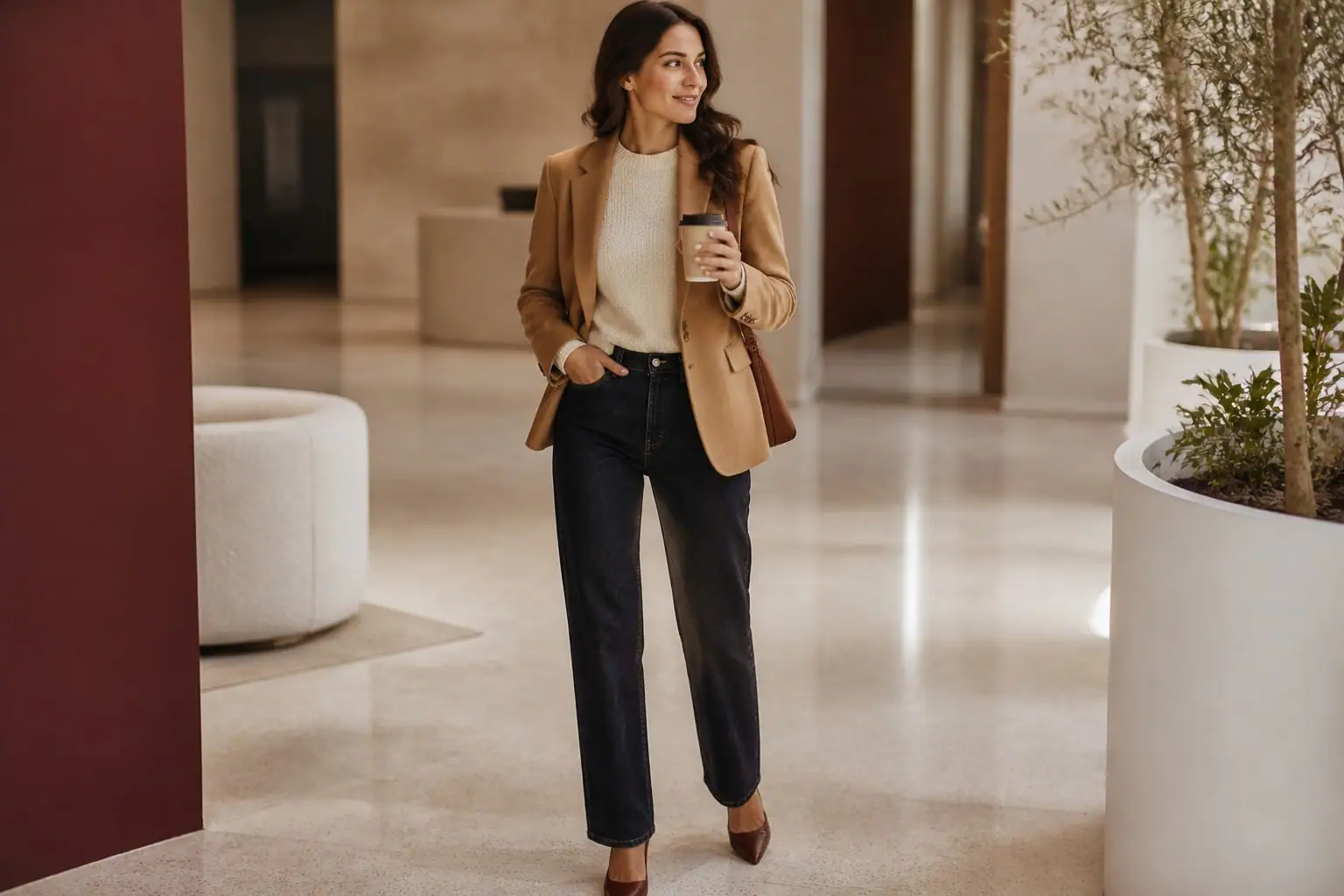
Smart casual is a dress code that sits between jeans-and-a-T-shirt and a suit: relaxed pieces, worn with enough care that you look put together. Think a well-fitting blazer over a knit, dark trousers or clean jeans, and shoes that are not sneakers from the gym. There is no official rulebook, which is exactly why so many people search for it before an invitation, a first day at work or a dinner. This guide explains what it means, how it differs from business casual, what it looks like on women and on men, and which mistakes to avoid.
What does smart casual actually mean?
Wikipedia calls smart casual an "ambiguously defined" Western dress code: casual clothing with "smart" parts borrowed from the world of the lounge suit. The term is old. The article traces it to a newspaper in Iowa in 1924, when it described a lounge suit in an unusual color and a lighter, more relaxed fabric. Today it means the same idea in modern clothes: one or two sharper pieces, such as a blazer, a collared shirt or leather shoes, balanced with relaxed ones, such as dark denim or a soft knit.
Because nobody owns the definition, the same words mean different things in different places. One brand might include jeans and Converse for men, while a cruise line bars jeans for its main dining room. Climate matters too: the fashion house Brioni, quoted in the same article, notes that smart casual in a Sardinian summer is not the same as in a Toronto winter. In a hot place the jacket can simply go.
A useful rule of thumb is the "one step up" test. Take what you would wear on a normal weekend and upgrade it by one level: a better fit, a crisper fabric, cleaner shoes, one structured layer. If you can say what the upgrade is, you are in smart casual territory.
How is smart casual different from business casual?
The two overlap so much that sources disagree on which one is more formal. Wikipedia says the terms had merged by the 1950s and that whether any difference exists is disputed, and it describes business casual as a form of smart casual worn for business. Business casual replaced traditional office dress in white-collar workplaces and spread in the United States after the "Casual Friday" custom that began in California in the 1990s, itself inspired by Hawaii's "Aloha Friday" of the 1960s.
In practice, most people draw the line like this:
- Business casual is built around the workplace. Men usually wear a dress shirt and trousers without a matching suit jacket, tie optional. Women might choose a blouse with trousers, or a knee-length skirt or dress. T-shirts, sweatshirts and very short skirts are commonly excluded.
- Smart casual is built around looking sharp while staying relaxed. It leaves more room for personality: dark jeans, a knit instead of a shirt, loafers or clean minimal sneakers, depending on the venue.
Neither guidebook is final. If the invitation or your employer uses either phrase, the safest move is to aim for the middle: tailored trousers or very dark, unripped jeans, a collared or knit top, a jacket or cardigan, and closed, clean shoes. When the stakes are high, ask what they mean.
What does a smart casual outfit look like for women?
For women, smart casual is mostly about choosing one structured piece and keeping everything else calm. A few combinations that work almost anywhere:
- Blazer, knit and straight jeans. Dark, plain denim with no rips, a fine-knit top and a blazer in camel, navy or charcoal. Add leather loafers or ankle boots.
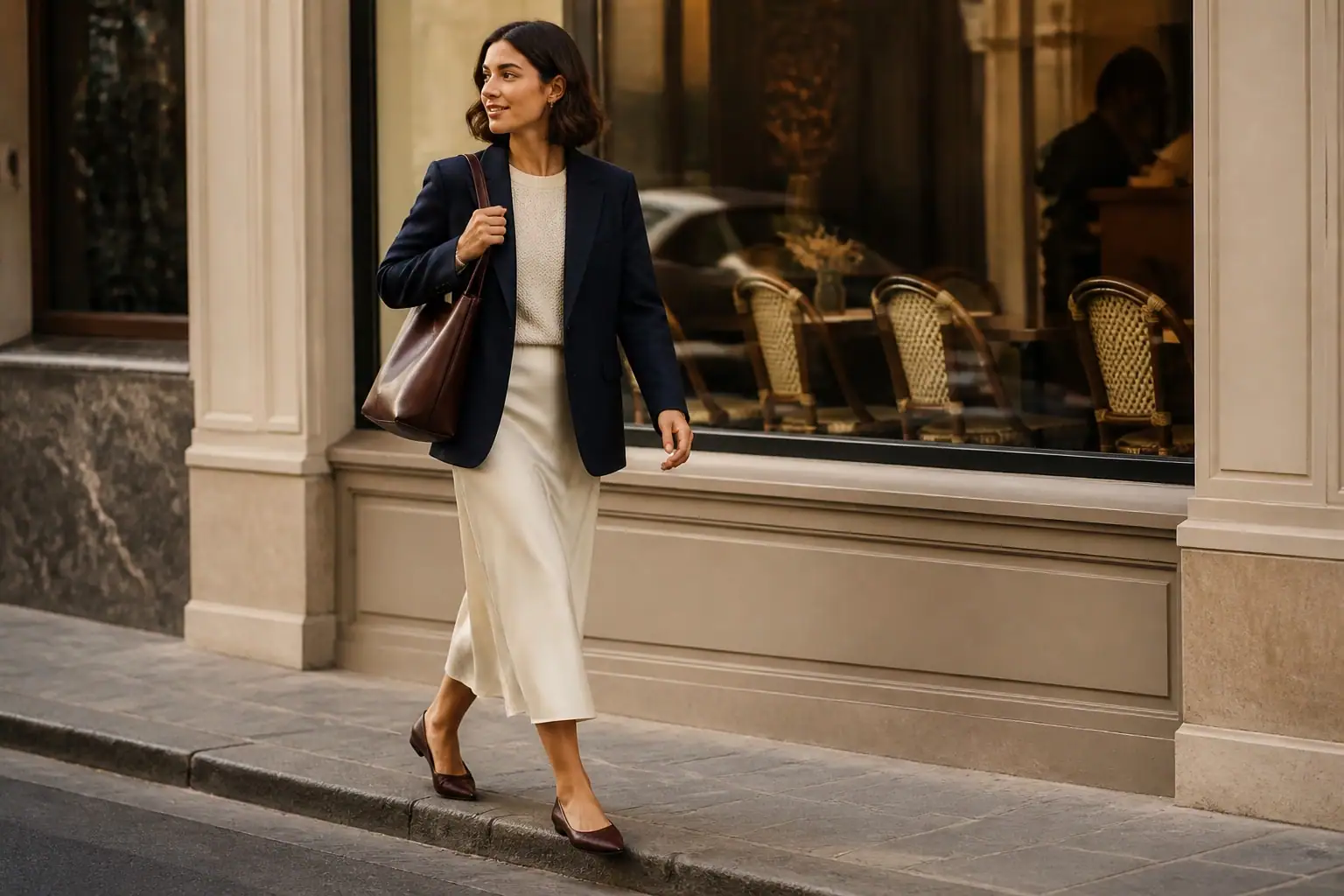
- Midi skirt and tucked-in top. A skirt that ends below the knee, a simple blouse or fitted knit, and a belt. Flats or low block heels keep it relaxed.
- Knit dress and a jacket. A plain dress in a matte fabric, with a short jacket or long cardigan and boots or minimal sneakers.
- Tailored trousers and a shirt. Wide or straight-leg trousers, a poplin shirt with the sleeves pushed up, and a slim belt.
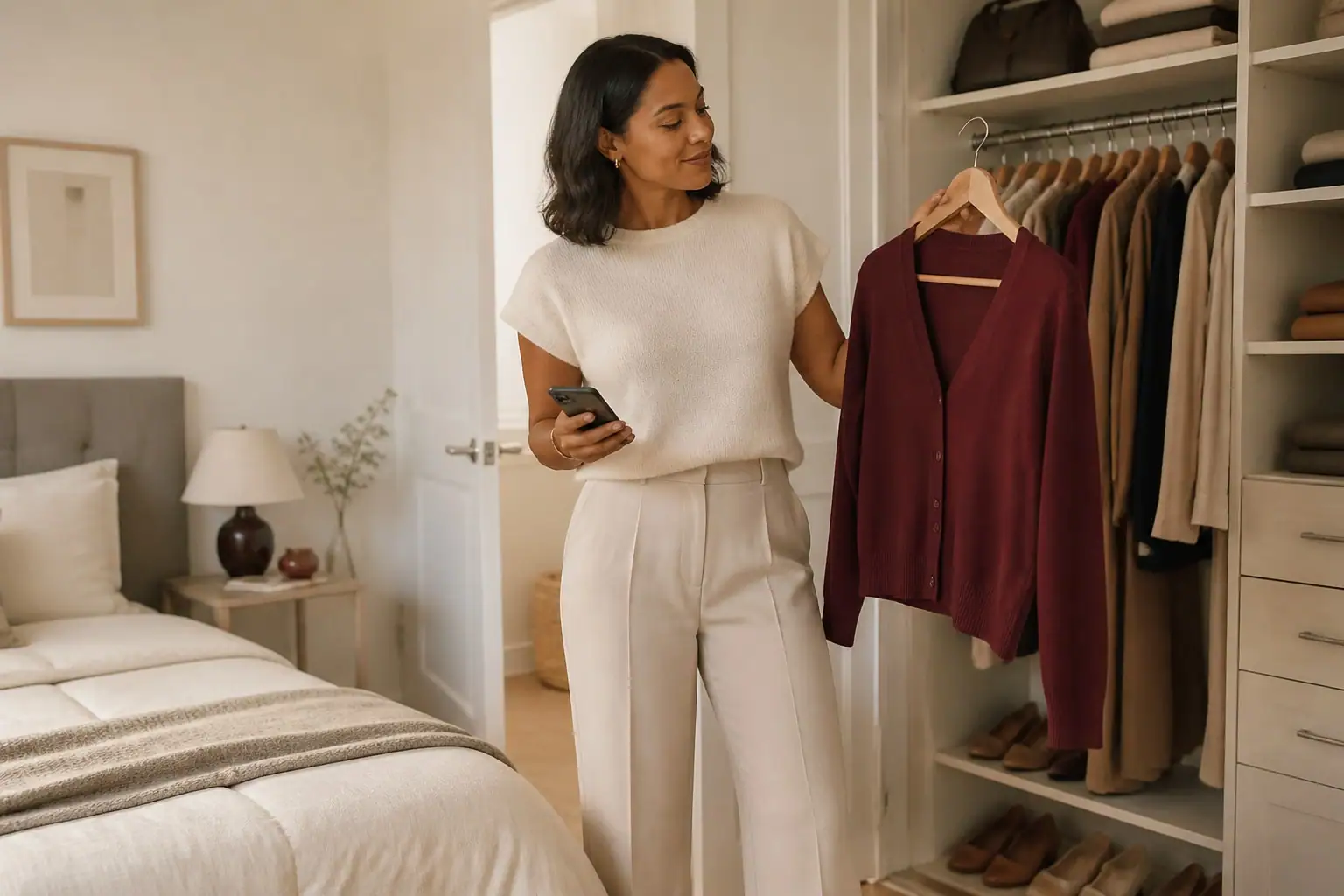
Keep colors in a small family. Neutrals such as ivory, camel, navy, charcoal and olive mix easily, and one accent, like a marsala cardigan, makes the outfit look chosen rather than assembled. Fabric does a lot of the work here: a fine knit, a crisp cotton or a structured wool-blend looks smarter than a thin stretchy jersey, even in the same cut.
What does a smart casual outfit look like for men?
For men the formula is a little more fixed, and it is easy to follow. Start with trousers, pick a top with some structure, and finish with real shoes.
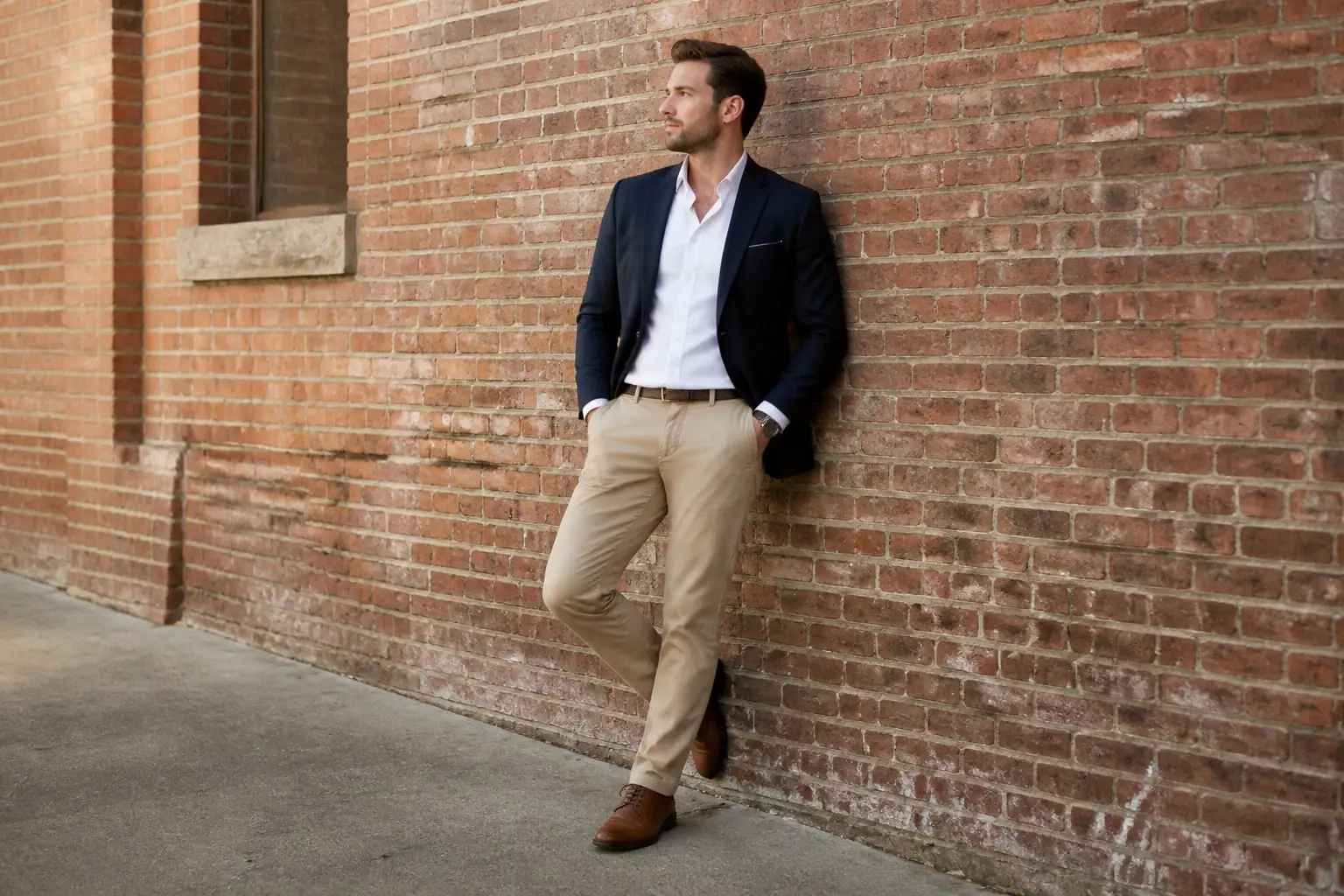
- Chinos, an oxford shirt and a navy blazer. The most reliable version, which also matches what several style guides cited by Wikipedia suggest: chinos or khakis, a collared shirt and a blazer or sport coat.
- Dark jeans, a fine-gauge sweater and leather shoes. Skip the jacket if the place is warm or the evening is casual. A crew or half-zip knit reads smarter than a hoodie.
- Polo or knit polo with tailored trousers. A good option in summer, when a jacket is too much. Tuck it in and add a belt.
- Overshirt over a plain tee with chinos. The most relaxed version, fine for a casual office or a dinner with friends.
For shoes, brown or black leather derbies, loafers, suede boots or minimal leather sneakers all work, as long as they are clean. Fit matters more than price: trousers that end at the ankle and a shirt that does not balloon at the waist will make a modest outfit look deliberate.
Where does smart casual work: the office, dinner or an interview?
The office. If your workplace says smart casual, you can usually wear what is above, but read the room in your first week. A traditional firm may expect trousers and a collared shirt; a creative studio may be happy with dark jeans. When unsure, go slightly smarter than your colleagues and relax from there.
Dinner. A restaurant that asks for smart casual wants you to look like you made a small effort. Avoid gym wear, beachwear, flip-flops and clothes with large logos. A blazer or a nice knit with good shoes covers almost everything from a bistro to a hotel restaurant. Checking the menu and photos online tells you how dressy the crowd will be, and our short method for deciding what to wear today helps when the day also has other plans.
An interview. For many offices, smart casual is a safe interview level, but it leans to the formal end: tailored trousers, a collared shirt or a fine knit, a blazer, and polished shoes. The British newspaper The Guardian, as reported in the Wikipedia article, quotes recruiters who accept plain, straight, smart jeans in some settings, but for an interview it is wiser to wear trousers and keep denim for the second round once you know the culture.
Weather. Smart casual bends to temperature. In mild days a light layer is enough, as in our guide to what to wear in 60 degree weather. In summer, swap the blazer for a lightweight shirt jacket or simply a good shirt; in winter, add a wool coat and boots.
Which smart casual mistakes should you avoid?
Most mistakes come from going too far in one direction.
- Too casual. Ripped or faded jeans, graphic T-shirts, worn sneakers and hoodies turn the look into plain casual.
- Too formal. A full matching suit with a tie, or a cocktail dress with heels, reads as overdressed unless the invitation says otherwise.
- Poor fit. A blazer with sleeves that cover your hands or trousers that pool over your shoes ruins the effort.
- Forgetting the shoes. Scuffed or sporty shoes are what people notice first. Clean them before you leave.
- Ignoring the setting. What works in a city office may not work at a beach restaurant. Climate and culture both change the rule.
- Too many statements. One bold piece is style; three is noise. Let a single item lead.
A small wardrobe of well-fitting pieces handles all of this better than a big one. If you want to make that wardrobe work harder, see how to build a capsule wardrobe in five simple steps.
See your smart casual look with Freya
Not sure the blazer works with those jeans? Tell Freya where you are going, whether it is the office, a dinner or an interview, and she puts the outfit together and shows it on you. Send a photo of a piece you already own, say what to change, and save the look to your Wardrobe when it feels like you.
Sources
Keep reading
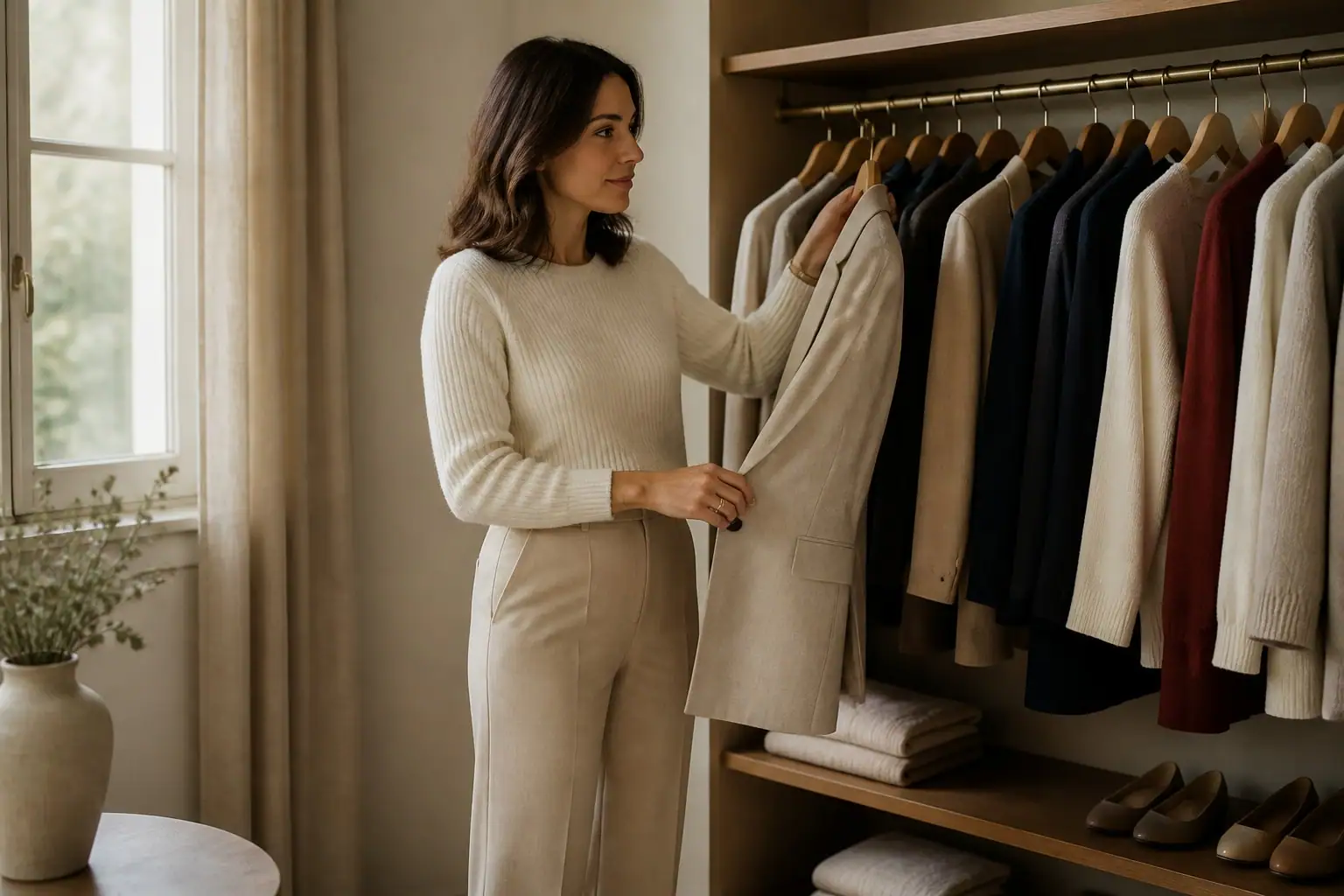
How to Build a Capsule Wardrobe in 5 Simple Steps
A capsule wardrobe is a small set of pieces that work together. Here are five practical steps, a sample 24-piece list for four seasons and the term's origin.
What Should I Wear Today? A One-Minute Method
Not sure what to wear today? Check the feels-like temperature, look at your day, build one outfit from three pieces, and see how an AI stylist can help.
What to Wear to a Rodeo: Boots, Hats and Layers
A rodeo is a long day of sun, dust and bleacher seats. Here is what a woman can wear, from boots and jeans to straw or felt hats, plus three easy looks.